
August 19, 2026
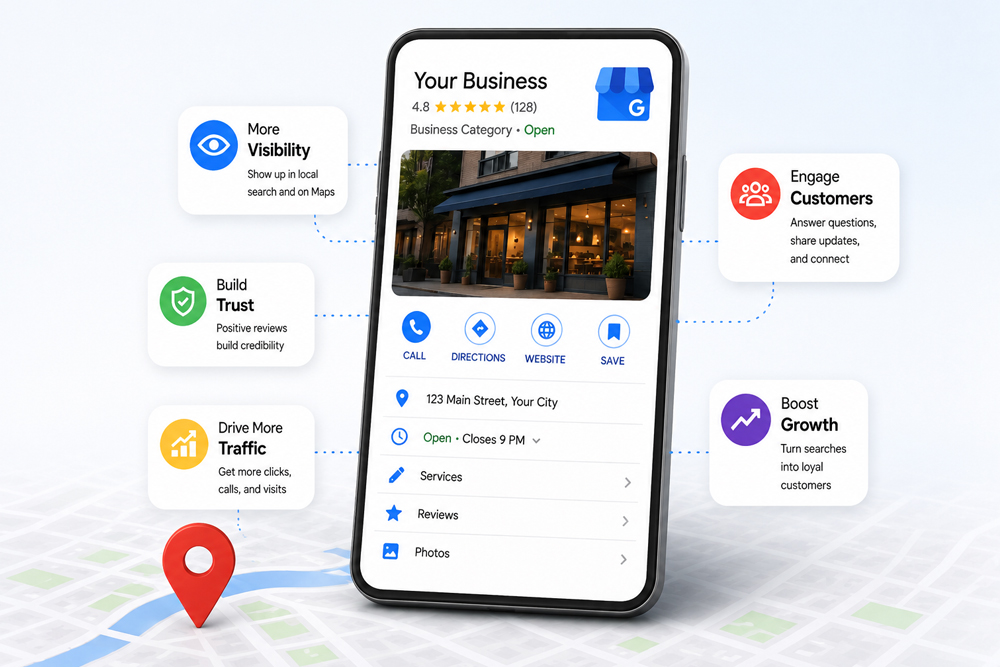
Ask most small business owners about their Google Business Profile and you will hear some version of the same thing: they set it up...


In today’s digital age, dominating search results and being featured in AI-powered overviews is not just a possibility but a necessity for businesses and content creators. As search engines evolve, AI has become an integral part of how information is processed and displayed. With advancements in technology, particularly through Google’s RankBrain, BERT, and other AI algorithms, optimising your content for search engines has become more complex yet more achievable.
Artificial Intelligence (AI) refers to the algorithms and systems that enhance search engines’ ability to interpret and rank content based on user intent and content relevance. Over the years, search engines like Google have increasingly relied on AI to deliver more accurate results for users. AI tools such as Natural Language Processing (NLP), Machine Learning, and Deep Learning have significantly improved search engine abilities.
Google, for example, uses RankBrain and BERT to better understand user queries and provide the most relevant results. Additionally, the use of Featured Snippets and the Knowledge Graph enhances how content is presented directly on search engine results pages (SERPs). In this evolving landscape, it’s critical to adapt your SEO strategies to ensure your content is not only found but also positioned at the top of the search results.
One of the most effective strategies for securing a spot in AI overviews is to focus on long-tail keywords. These are specific phrases that users search for when they have clear intent. While they may be less competitive than broader keywords, they often attract higher-quality traffic.
Structured data (or schema markup) is a critical component in getting your content featured in AI overviews. Schema markup is a code added to your content that helps search engines better understand your data. This can lead to your content appearing as a Featured Snippet, Rich Snippet, or even in the Knowledge Graph.
Featured Snippets are direct answers to users’ queries, often pulled from the content of a webpage. They appear at the top of Google’s search results in a box with a summary of the answer, followed by a link to the source.
To improve your chances of being featured in a snippet:
| Snippet Type | Example | Best Content Format |
| Paragraph Snippet | “What is SEO?” | Concise answer, 40-50 words |
| List Snippet | “Top 5 SEO Strategies” | Numbered list, each strategy explained |
| Table Snippet | “SEO Ranking Factors” | Table format with key factors |
| Video Snippet | “How to optimise your website” | Embedded video, clear instructions |
AI-powered search algorithms like Google’s RankBrain and BERT process vast amounts of data to deliver the most relevant search results. Understanding how these algorithms function is crucial to optimising your content.
NLP is used to understand the meaning behind words and phrases in a query. This helps search engines deliver more accurate, contextually relevant results. As NLP becomes more advanced, it enables search engines to:
There are numerous AI tools available for SEO that can help you identify the best keywords, optimise content, and track performance. Some AI tools provide:
Understanding and aligning your content with user intent is crucial. User intent refers to the reason behind a search query and can generally be divided into three categories:
By creating content that answers these specific types of queries, you can better align with AI-powered search engine algorithms and dominate search results.
Backlinking remains one of the most powerful SEO techniques. High-quality, relevant backlinks from authoritative websites can significantly improve your domain authority, which in turn helps your content rank higher. However, be cautious to avoid spammy backlinks, which could have the opposite effect.
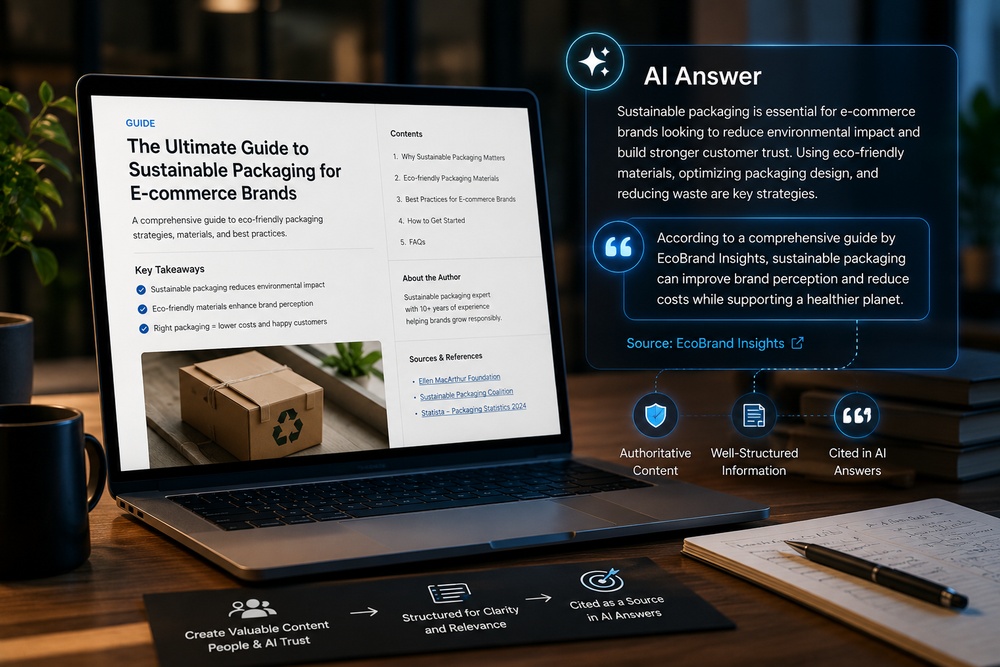
Content marketing is integral to SEO and AI search result domination. AI’s growing understanding of content relevance and user intent means that providing valuable, well-structured content is critical. Optimise for both humans and algorithms.
AI tools are continuously evolving, providing real-time suggestions for improving your content. By using AI to analyse user behaviour and search patterns, you can continually optimise your content to stay ahead in search results.
By applying these tips and leveraging AI strategies, your content can not only be featured in AI overviews but also dominate search results, helping you stay ahead in the digital marketplace. For businesses looking to achieve the best SEO results, incorporating AI into your content strategy is key to future success. Generate Your Audience is here to help guide you through the intricacies of AI-driven SEO, offering expert insights and strategies tailored to your specific needs.
References:
1. What is the role of AI in search engine optimisation?
AI helps search engines understand user queries better and match them with relevant content. AI algorithms like RankBrain and BERT are designed to process language and improve the accuracy of search results.
2. How do Featured Snippets help with SEO?
Featured Snippets provide quick, concise answers to users’ queries, making your content more visible at the top of the search results, increasing the likelihood of user clicks.
3. What are the best practices for using structured data?
By adding structured data (schema markup) to your pages, you provide search engines with explicit information about the content, which can lead to better indexing and the possibility of being featured in rich results.
4. How does user intent affect my content strategy?
Understanding whether a user’s intent is informational, navigational, or transactional allows you to create tailored content that satisfies these needs, thereby improving your chances of ranking higher.
5. How can I optimise my content for AI algorithms like BERT?
By focusing on high-quality, contextually rich content that directly addresses user intent and uses natural, conversational language, you can optimise for AI algorithms like BERT.
6. Why is mobile optimisation important for SEO?
With more searches happening on mobile devices, Google places high importance on mobile-friendliness. Optimising for mobile ensures better user experience and improves your ranking in search results.
Ask most small business owners about their Google Business Profile and you will hear some version of the same thing: they set it up...
A new acronym has entered the marketing vocabulary, and unlike most, it points to a genuine shift rather than a rebrand of something old....

Search has changed shape faster in the past two years than in the previous ten. Ask Google a question today and the first thing...